Many business owners work hard all day but still end the week unsure about what actually happened in the business. Sales may have been strong, but which products performed best? Expenses may have increased, but where did the money go? Stock may be moving, but which items are becoming slow-moving or unavailable? Without clear daily reporting, business decisions are often based on assumptions, memory, and incomplete information.
That can be risky.
A growing business needs more than bills, receipts, and sales records. It needs a simple way to understand its performance every day.
This is where daily business reporting becomes essential.
What Is Daily Business Reporting?
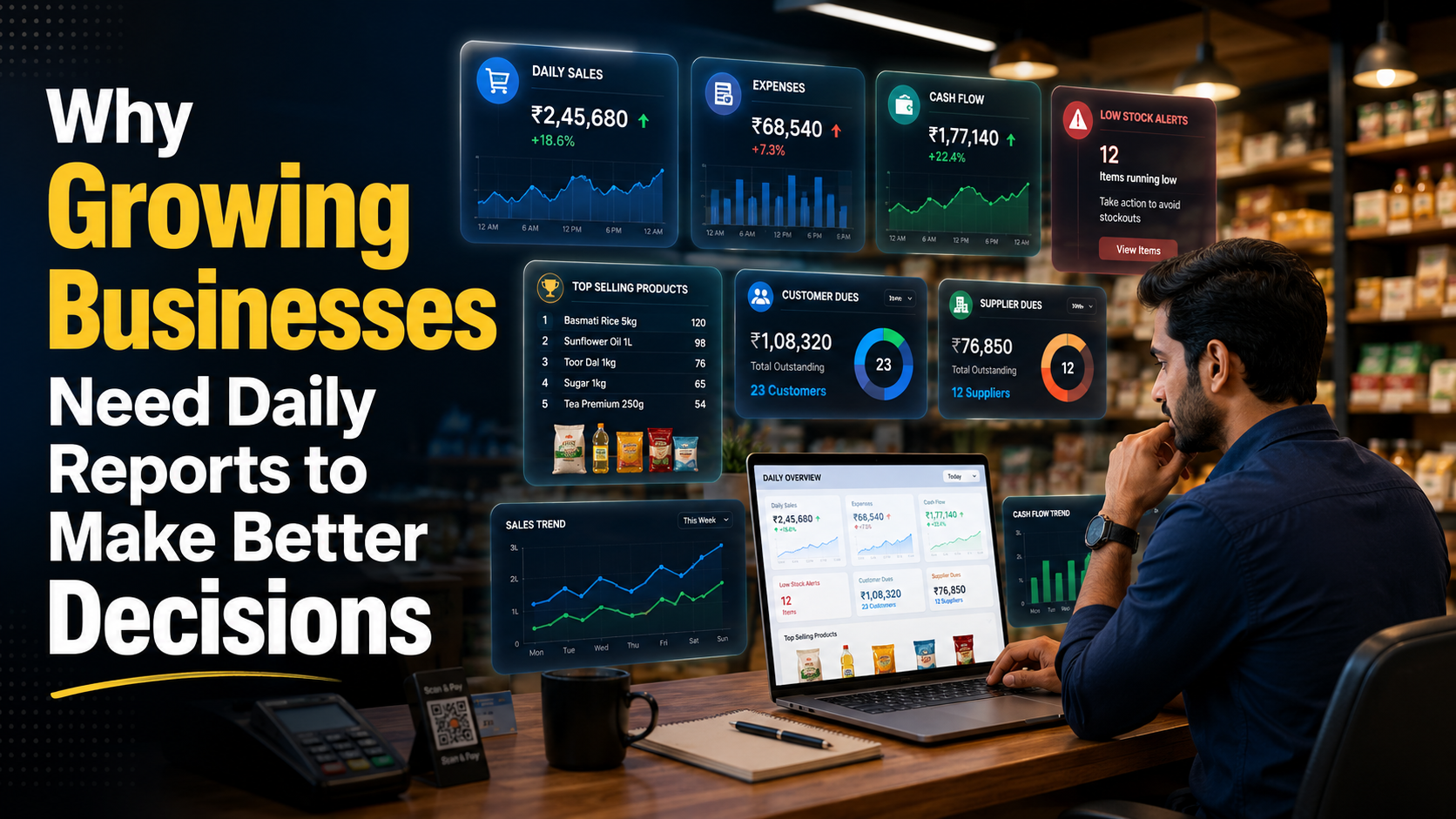
Daily business reporting means reviewing the most important numbers from your business on a regular basis.
Depending on the business, these reports may include:
- Total daily sales
- Cash received
- Pending customer payments
- Expenses recorded
- Best-selling products
- Low-stock items
- Purchase activity
- Supplier dues
- Profit trends
- Staff sales performance
The goal is not to create complicated reports. The goal is to give business owners a clear picture of what is happening before small problems become major ones.
Why Many Businesses Make Decisions Without Data
In many small and medium-sized businesses, information is available but scattered.
Sales may be in one notebook. Expenses may be recorded in a separate register. Stock information may be checked manually in the store or warehouse. Customer payments may be tracked through WhatsApp messages or spreadsheets.
Because everything is disconnected, owners often rely on questions like:
- “Did we have a good day?”
- “Do we have enough stock?”
- “Why is cash low this week?”
- “Which customer still needs to pay?”
- “Are expenses higher than usual?”
When answers depend on memory, it becomes difficult to manage the business confidently.
Signs Your Business Needs Better Daily Reporting
1. You Only Review Performance at the End of the Month
Waiting until the month ends can be too late.
By then, slow sales, rising expenses, stock shortages, or unpaid customer balances may already have affected cash flow and profitability.
Daily or weekly visibility helps owners respond faster.
2. You Do Not Know Which Products Are Driving Revenue
A busy shop does not always mean profitable sales.
Some products may sell frequently but produce low margins. Others may be highly profitable but rarely promoted or restocked.
Reports help business owners understand what is actually contributing to revenue.
3. Cash Does Not Match Your Expectations
A common issue for growing businesses is this: sales are happening, but available cash still feels low.
This may happen because of:
- Pending customer payments
- High operating expenses
- Excess stock purchases
- Supplier dues
- Unrecorded transactions
- Low-margin products
A clear daily report makes these gaps easier to identify.
4. Stock Problems Keep Repeating
When there is no regular reporting, businesses often discover stock issues only when a customer asks for an item that is unavailable.
Daily stock reports can help identify:
- Low-stock products
- Fast-selling items
- Slow-moving inventory
- Products that need reordering
- Products that may be tying up cash unnecessarily
5. You Spend Too Much Time Asking for Updates
If a business owner needs to call staff members, check multiple records, and search through bills before understanding the day’s performance, the reporting process is not efficient.
A centralized system reduces this effort by bringing key business information together.
How Daily Reporting Improves Business Decisions
Better Sales Decisions
Sales reports show what customers are buying, when demand is highest, and which products are underperforming.
This helps businesses decide:
- Which products to promote
- Which products to restock
- Which items should be discounted
- Which categories deserve more attention
Better Expense Control
Expense reports help owners spot unusual spending before it becomes a larger problem.
For example, a business may notice that delivery, utilities, staff expenses, or small operational purchases are increasing faster than expected.
Tracking these trends regularly makes cost control easier.
Better Inventory Planning
Instead of ordering based on guesswork, businesses can use actual sales and stock data to plan purchases.
This can reduce:
- Stock shortages
- Overstocking
- Dead inventory
- Emergency purchases
- Lost sales opportunities
Better Cash Flow Awareness
Daily reporting gives owners a clearer view of cash movement.
They can see what has been earned, what has been collected, what is still pending, and what payments need to be made soon.
That makes it easier to plan supplier payments, expenses, and future purchases.
Faster Problem Detection
The earlier a business notices a problem, the easier it is to fix.
A small drop in sales, an increase in returns, a growing customer balance, or a low-stock item may not seem serious on one day. But over time, it can affect the entire business.
Regular reporting helps owners take action before issues grow.
Important Reports Every Business Should Review
Not every business needs dozens of dashboards. However, most businesses benefit from reviewing a few core reports consistently.
Sales Report
A sales report helps track:
- Daily revenue
- Number of bills or orders
- Top-selling products
- Sales by category
- Sales trends over time
Expense Report
An expense report helps identify:
- Daily operating costs
- Recurring expenses
- Unusual spending
- Expense categories
- Total spending over a selected period
Inventory Report
An inventory report helps businesses monitor:
- Available stock
- Low-stock items
- Fast-moving products
- Slow-moving products
- Product movement
Customer Balance Report
This report helps owners track:
- Outstanding customer payments
- Overdue balances
- Payment history
- Credit activity
- Customers requiring follow-up
Supplier Due Report
Supplier reports make it easier to understand:
- Pending payments
- Purchase history
- Supplier balances
- Upcoming payment obligations
- Procurement activity
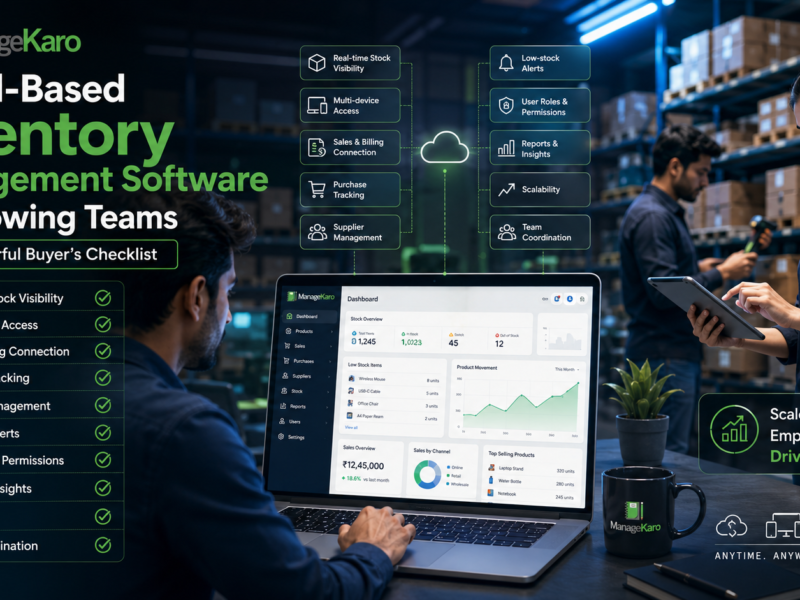
How ManageKaro Helps Businesses Track Daily Performance
ManageKaro helps businesses bring their operational data into one place.
Instead of managing sales, inventory, expenses, customer balances, supplier records, and billing through separate tools, businesses can gain better visibility through connected records and reports.
With ManageKaro, business owners can review the information that matters most, including:
- Sales activity
- Product movement
- Inventory status
- Customer dues
- Supplier balances
- Expenses
- Purchase records
- Ledger information
This makes daily reporting more practical and less time-consuming.
Rather than waiting until the end of the month to discover problems, businesses can make decisions based on what is happening now.
Simple Habits for Better Business Reporting
To make reporting useful, businesses should build a consistent routine.
Review Key Numbers Daily
Spend a few minutes at the end of each day reviewing sales, cash, expenses, and pending balances.
Compare Today With Previous Days
Look for patterns. Is sales performance improving, stable, or declining? Are expenses higher than normal? Are certain items selling faster?
Follow Up on Outstanding Payments
Do not let customer dues remain unnoticed for long periods. Regular reports make payment follow-ups more organized.
Use Reports Before Making Purchases
Before ordering more stock, review what is already available, what is selling, and what has been slow-moving.
Share the Right Information With Staff
Managers and staff should have access to the information they need to carry out their responsibilities, while business owners retain control over the bigger financial picture.
Final Thoughts
A business cannot grow confidently when important decisions are made through guesswork.
Daily business reporting gives owners a clearer view of sales, expenses, inventory, customer payments, supplier dues, and overall performance.
It does not need to be complicated. It simply needs to be accurate, timely, and easy to review.
With ManageKaro, businesses can move away from scattered records and gain the visibility needed to make smarter decisions every day.