Many business owners have faced this frustrating situation: sales are increasing, customers are coming in, orders are being delivered, and the business looks busy. But when it is time to pay suppliers, salaries, rent, or utility bills, there is not enough cash available. This is one of the most common problems faced by growing businesses. The issue is not always a lack of sales. Often, it is a lack of visibility and control over where money is getting stuck. Effective cash flow management for small business is essential because a business can be profitable on paper and still struggle to pay its day-to-day expenses.
Understanding where cash is tied up, whether in unpaid customer invoices, slow-moving inventory, or untracked expenses, is the first step toward fixing the problem.
Sales Are Not the Same as Cash in Hand
A sale only becomes useful when the money is actually collected.
For example, imagine a wholesaler sells products worth PKR 500,000 in a month. That sounds like strong performance. But if PKR 350,000 of that amount is sold on credit and customers take 45 to 60 days to pay, the business may still have very little cash available today.
At the same time, the business may need to pay for:
- New inventory
- Staff salaries
- Shop rent
- Electricity and internet
- Delivery costs
- Supplier payments
- Repairs and unexpected expenses
This creates pressure because the business is spending cash now while waiting to receive cash later.
That is why sales figures alone cannot tell you whether your business is financially healthy.
The Five Reasons Businesses Run Out of Cash
1. Too Much Money Is Stuck in Credit Sales
Credit sales can help attract customers and build long-term relationships. But when credit is not monitored properly, it can quietly damage cash flow.
Many businesses do not have a clear answer to questions such as:
- Which customers owe us money?
- How much is overdue?
- Which invoices are due this week?
- Which customer has crossed their credit limit?
- Are we collecting payments fast enough?
When this information is scattered across notebooks, WhatsApp messages, Excel sheets, and staff memory, overdue payments are easy to miss.
The result is simple: the business keeps selling, but cash does not come back quickly enough.
2. Inventory Is Sitting on Shelves for Too Long
Inventory is valuable, but it is not cash.
When too much money is tied up in slow-moving stock, the business may look well-stocked while struggling to pay immediate expenses.
For example, a retailer may purchase a large amount of seasonal stock because it appears profitable. But if that stock moves slowly, the money invested in it remains locked for weeks or months.
This can lead to:
- Limited cash for fast-moving items
- Emergency borrowing from suppliers or lenders
- Discounting stock to free up cash
- Missed opportunities to purchase better-selling products
- Overstocked shelves and understocked bestsellers
The goal is not simply to hold more inventory. The goal is to hold the right inventory.
3. Expenses Are Being Recorded Too Late
Small expenses often seem harmless on their own.
A delivery charge here, a staff advance there, a repair bill, tea expenses, transport costs, packaging, fuel, or small supplier payments.
But when these are not recorded immediately, business owners lose track of how much is actually going out each day.
By the end of the month, the profit may look lower than expected, and nobody is fully sure why.
This is especially common in businesses where multiple people handle cash. Without a proper process, expenses can be forgotten, duplicated, or recorded without enough detail.
Recording every expense on time creates clarity. It also helps identify where unnecessary spending can be reduced.
4. Purchase Decisions Are Made Without Cash Planning
Purchasing stock is necessary, but buying too early or buying too much can create a cash shortage.
A business may receive a supplier discount and decide to place a large order. The discount may look attractive, but it can become a problem if the purchase absorbs most of the available cash.
Before placing a major order, business owners should consider:
- How quickly will this stock sell?
- Do we already have enough of this item?
- What payments are due in the next 30 days?
- Will we still have enough cash for salaries and operating costs?
- Are there faster-moving products that need replenishment first?
Good purchase management is not only about getting lower prices. It is about protecting the business from running short of cash.
5. The Owner Does Not Have a Daily Financial View
Many SME owners only check their finances at the end of the week or month.
By then, it may already be too late to prevent a problem.
A business should be able to see key numbers regularly, including:
- Cash received today
- Sales made today
- Expenses recorded today
- Payments due to suppliers
- Customer receivables
- Inventory value
- Low-stock products
- Profit trends
- Outstanding balances
When these numbers are visible in one place, owners can make better decisions before a cash shortage becomes a crisis.
How to Improve Cash Flow Without Reducing Sales
Improving cash flow does not always require cutting costs aggressively or stopping credit sales. It requires better control.
Here are practical steps businesses can take.
Create Clear Credit Rules
Set credit limits for customers based on their payment history. Avoid giving unlimited credit simply because a customer has been buying from you for a long time.
You can also create a simple process for:
- Recording every credit sale
- Setting payment due dates
- Sending payment reminders
- Following up on overdue balances
- Reviewing high-risk customers
The faster you collect money from customers, the healthier your cash position becomes.
Identify Slow-Moving Inventory
Review inventory regularly and separate products into three groups:
- Fast-moving products
- Medium-moving products
- Slow-moving or dead stock
Fast-moving products should be replenished quickly. Slow-moving stock should be reduced through bundles, promotions, discounts, or more focused selling efforts.
This frees up cash that can be used for products your customers actually want.
Record Expenses the Same Day
Do not wait until the end of the week to enter expenses.
Every payment, no matter how small, should be recorded as soon as it happens. This builds a more accurate picture of what the business is spending.
It also makes it easier to spot unnecessary expense categories over time.
Plan Purchases Around Cash Availability
Before placing a large purchase order, review upcoming obligations.
A simple purchase plan should consider:
- Supplier payment dates
- Payroll dates
- Rent and utility payments
- Customer collections expected
- Current cash balance
- Existing inventory levels
This helps prevent situations where a business has plenty of stock but no cash left to operate.
Review Business Numbers Every Day
A five-minute daily review can prevent major financial surprises.
Look at sales, cash received, pending receivables, expenses, stock levels, and supplier dues. This habit helps owners notice problems early and take action before they grow.
How an Integrated Business System Makes This Easier
When billing, inventory, expenses, purchases, and customer ledgers are managed separately, business owners have to spend time collecting information before they can make a decision.
An integrated system brings these areas together.
For example, when a sale is recorded, it should affect sales records, inventory levels, customer balances, and financial reports. When an expense is added, it should immediately appear in the business’s financial picture. When stock is purchased, the business should be able to see how that decision affects available cash and inventory value.
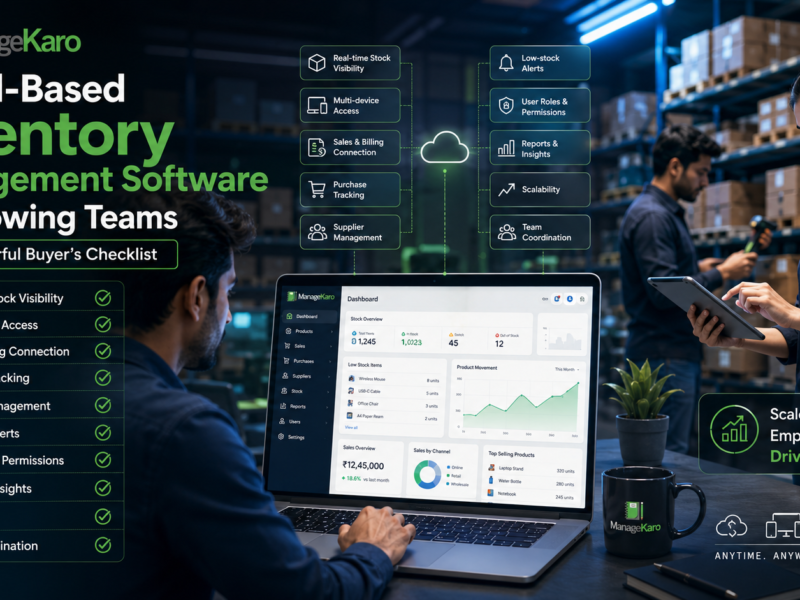
This is where a business management platform such as ManageKaro can help. Instead of relying on multiple tools, notebooks, and spreadsheets, businesses can manage core operations from one place.
For growing retailers, wholesalers, distributors, and manufacturers, this level of visibility can make the difference between reacting to cash problems and preventing them.
Final Thoughts
More sales do not automatically mean more cash.
A healthy business needs visibility into customer payments, stock movement, purchases, expenses, supplier obligations, and daily cash position.
When these areas are managed properly, owners can make smarter decisions, protect working capital, and grow with more confidence.
The goal is not only to sell more. The goal is to keep enough cash moving through the business to support growth every day.