A product can sell every day and still contribute very little to your business profit. This is one of the most common mistakes business owners make. They look at sales volume, see that a product is moving quickly, and assume it is a strong performer. But sales alone do not show the full picture. A product may have a low margin, frequent discounts, high delivery costs, supplier price increases, or regular returns. Another product may sell less often but generate far more profit on every sale. That is why businesses need to look beyond revenue and start tracking product-wise profit.
For retailers, wholesalers, pharmacies, mini-marts, clothing stores, electronics shops, and other product-based businesses, understanding profitability at the product level can improve buying decisions, pricing, inventory planning, and long-term growth.
What Is Product-Wise Profit Tracking?
Product-wise profit tracking means measuring how much money each product actually contributes after considering its cost and selling price.
A simple calculation looks like this:
Product Profit = Selling Price − Product Cost
For example, if you buy a product for Rs. 500 and sell it for Rs. 700, your gross profit is Rs. 200.
However, real profitability can also be affected by:
- Discounts offered
- Delivery or handling costs
- Returns or damaged goods
- Supplier price changes
- Promotional expenses
- Packaging costs
- Staff effort or sales commission
The goal is not only to know how much you sold. It is to understand what each sale is worth to the business.
Why Sales Numbers Can Be Misleading
High sales can create a false sense of success.
Imagine two products:
| Product | Monthly Sales | Profit Per Unit | Total Monthly Profit |
|---|---|---|---|
| Product A | 300 units | Rs. 20 | Rs. 6,000 |
| Product B | 80 units | Rs. 150 | Rs. 12,000 |
Product A sells much more often, but Product B contributes twice as much profit.
Without product-wise profit tracking, a business owner may keep investing in the highest-selling item while overlooking the items that actually support profitability.
Signs Your Business Needs Better Profit Tracking
1. You Know Your Sales but Not Your Margins
Many businesses can state their daily sales total immediately. But when asked which products have the best margins, they are unsure.
This means decisions may be based on revenue rather than profit.
2. Supplier Prices Keep Changing
Supplier prices can increase without the business updating selling prices quickly enough.
Even a small cost increase can reduce margins significantly, especially on fast-moving products.
3. Discounts Are Reducing Profit
Discounts can attract customers, but they should be monitored carefully.
A product may look popular because of promotional pricing, while the discount is actually removing most of the profit.
4. Fast-Moving Products Keep Draining Cash
Some products sell quickly but need to be restocked constantly. If their margins are too low, they may tie up cash without delivering enough return.
This is especially important for businesses with limited working capital.
5. You Are Unsure What to Restock First
When stock is low, owners often reorder based on what sold most recently.
A better approach is to consider both demand and profitability.
How Product-Wise Profit Tracking Improves Business Decisions
Better Pricing Decisions
Tracking profit by product helps you identify items that may be underpriced.
If supplier costs have increased but selling prices remain unchanged, the business may be losing margin without realizing it.
Profit tracking gives owners a reason to review prices more confidently.
Smarter Purchasing Decisions
Not every product deserves the same buying priority.
Businesses can use profit data to identify:
- High-margin products worth promoting
- Low-margin products that need price review
- Products that sell slowly and tie up cash
- Products that should be purchased in smaller quantities
- Products that have strong demand and healthy margins
Improved Discount Control
When businesses know the profit margin on a product, they can apply discounts more safely.
Instead of giving random discounts, owners can decide:
- Which products can support promotions
- How much discount is acceptable
- Which items should not be discounted
- Which customer groups can receive special pricing
Better Inventory Management
Profitability should influence inventory planning.
Fast-selling but low-profit products may still matter, but they should not automatically receive the largest share of purchasing budget. Businesses should balance stock levels across high-demand and high-margin items.
Clearer Growth Planning
When business owners know what drives profit, they can make stronger decisions about expansion, promotions, suppliers, and product categories.
This reduces guesswork and helps the business grow more sustainably.
Common Reasons Businesses Lose Product Profit
Incorrect Cost Prices
If purchase prices are not updated regularly, profit calculations can become inaccurate.
A business may believe an item is profitable based on an old cost price while the supplier has already increased the current rate.
Untracked Discounts
Unrecorded or excessive discounts can quietly reduce margins.
The sale may appear in reports, but the actual profit may be much lower than expected.
Damaged or Expired Stock
Products that expire, get damaged, or become outdated can reduce overall profitability.
These losses should be considered when reviewing which categories perform well.
Frequent Returns
A product with frequent returns may create extra costs, even when the initial sale looked profitable.
Tracking product returns can help owners spot quality, sizing, or customer-expectation issues.
Poor Supplier Negotiation
Without purchase history and cost comparisons, businesses may miss opportunities to negotiate better rates or switch to more reliable suppliers.
How to Start Tracking Product Profit
Step 1: Maintain Accurate Product Costs
Record the purchase cost for every product and update it whenever supplier pricing changes.
For products with extra costs, consider packaging, delivery, or handling where relevant.
Step 2: Keep Selling Prices Updated
Review selling prices regularly, especially when supplier costs increase.
A price that was profitable six months ago may no longer be profitable today.
Step 3: Review Discounts and Returns
Look at how discounts and returns affect each product category.
A product that seems popular may not be delivering enough return after promotions and adjustments.
Step 4: Compare Sales Volume With Profit Contribution
Do not only rank products by quantity sold.
Compare:
- Units sold
- Revenue generated
- Cost of goods sold
- Gross profit
- Discount impact
- Return rate
This gives a more complete picture of product performance.
Step 5: Use Reports to Identify Patterns
Regular reporting helps you notice trends such as:
- Products with rising costs
- High-margin categories
- Low-margin fast sellers
- Items that need price changes
- Categories that deserve more promotion
How ManageKaro Helps Businesses Track Product Performance
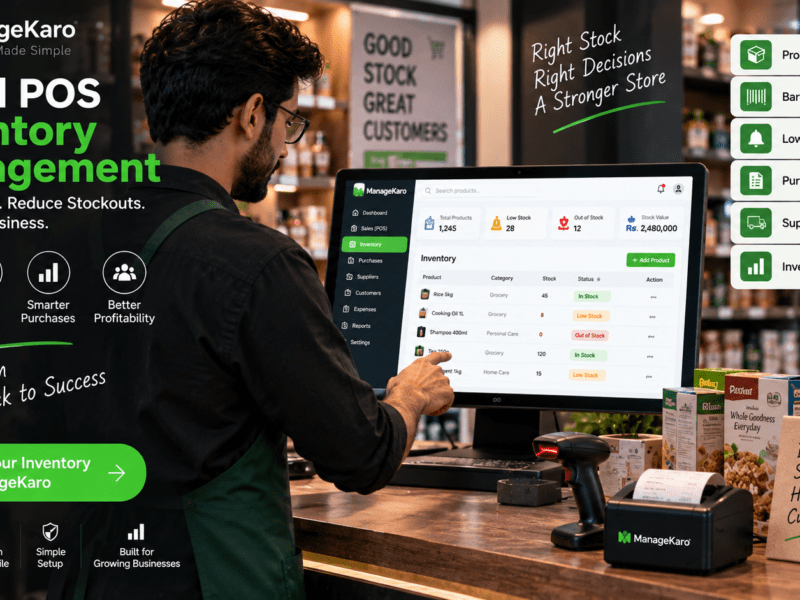
ManageKaro helps businesses bring sales, product records, purchases, inventory, billing, expenses, and reporting into one connected system.
This gives business owners a stronger foundation for reviewing product movement and making data-informed decisions.
With organized sales and purchase records, businesses can more easily assess:
- Which products are selling
- Which items need restocking
- Which products have changing costs
- Where discounts are being applied
- How inventory movement affects business performance
Instead of relying only on memory or scattered spreadsheets, ManageKaro helps businesses maintain clearer operational records.
Practical Tips to Improve Product Profitability
Review Your Best Sellers Monthly
Ask whether your top-selling products are also generating healthy margins.
If not, review supplier prices, discounts, and selling prices.
Promote High-Margin Products
Train staff to recommend profitable add-ons, bundles, or alternatives where appropriate.
Avoid Overstocking Low-Margin Items
Products with low profit and slow movement can trap cash in inventory.
Negotiate Based on Purchase History
Use supplier purchase history to negotiate better prices, bulk rates, or payment terms.
Test Price Changes Carefully
Small price adjustments can improve margins without significantly affecting demand. Track the result before making larger changes.
Final Thoughts
Sales are important, but profit is what keeps a business sustainable.
A product that sells quickly is not automatically the best product for your business. The most valuable products are the ones that balance demand, margin, and reliable stock movement.
By tracking product-wise profit, businesses can price more confidently, purchase more intelligently, control discounts, and focus on the products that truly support growth.
With ManageKaro, businesses can maintain better records across sales, purchases, inventory, and billing—helping owners make clearer decisions about what to sell, stock, and promote.
Answer Summary:
Product-wise profit tracking helps businesses measure the profit contribution of each item by comparing selling price with product cost, discounts, returns, and related costs. It helps owners identify high-margin products, review pricing, and make better purchasing decisions.
Frequently Asked Questions
Product-wise profit tracking is the process of measuring how much profit each product generates after comparing its selling price with its purchase cost, discounts, returns, and other direct costs. It helps businesses identify which products truly contribute the most to profit.
With ManageKaro, businesses can keep sales, purchases, inventory, and billing records organized in one place, making product performance easier to review.
High sales are not always profitable because a product may have a low margin, rising supplier costs, frequent discounts, delivery costs, or regular returns. A product that sells less can sometimes generate more profit per unit than a top-selling item.
ManageKaro helps businesses maintain clearer sales and purchase records so owners can make more informed pricing and stock decisions.
A simple product profit calculation is:
Product Profit = Selling Price − Product Cost
For better accuracy, businesses should also consider discounts, returns, delivery charges, packaging costs, and other direct expenses linked to that product.
Using ManageKaro, businesses can organize product, purchase, sales, and inventory records to support more accurate profit tracking.
Most businesses should review product profitability at least once a month. Businesses with fast-changing supplier prices, frequent discounts, or high sales volume should review it weekly.
With ManageKaro, owners can keep operational records updated and review product movement, sales activity, and purchasing data more consistently.
ManageKaro helps businesses manage sales, billing, inventory, purchases, product records, customer balances, and reports in one connected system. This gives owners better visibility into what is selling, what needs restocking, where discounts are being applied, and which products need closer attention.