A customer may walk into your shop, make a purchase, and leave with a smile. But that does not always mean they will return. Many businesses focus heavily on attracting new customers through discounts, offers, social media, and advertising. However, long-term growth often comes from something simpler: giving existing customers a reason to come back.why customers stop coming back to a shop? Customers may stop visiting a shop because of poor service, missing stock, billing mistakes, unclear pricing, delayed responses, or an inconsistent buying experience. The problem is that business owners do not always notice this immediately. A customer rarely says, “I am not coming back because your checkout process was slow.” They simply choose another shop next time.
Here are five common reasons customers stop coming back—and practical ways businesses can fix them.
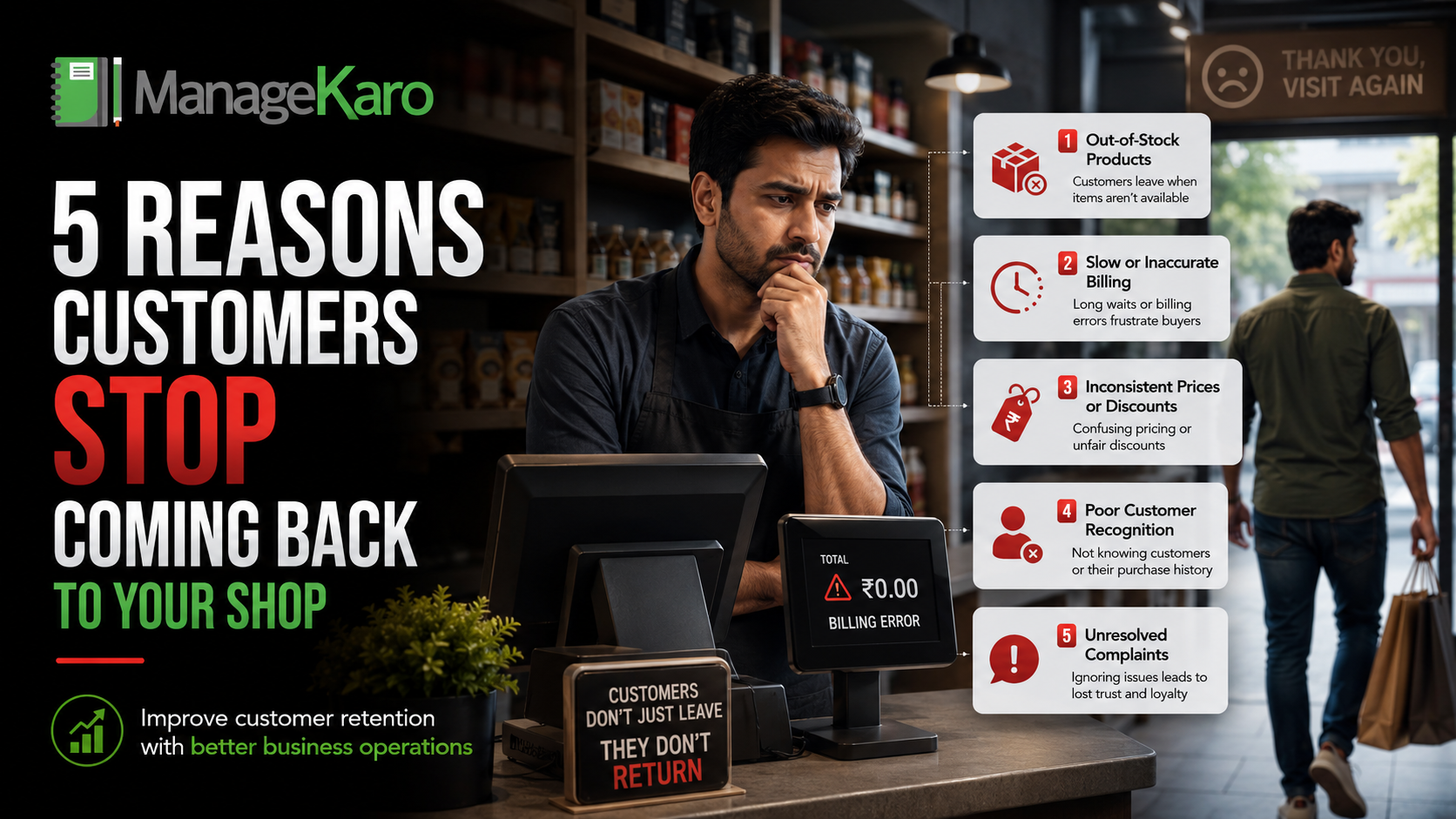
1. The Products They Need Are Often Out of Stock
Nothing is more frustrating than visiting a shop and finding that the item you need is unavailable.
If this happens once, a customer may understand. If it happens repeatedly, they may start buying from another business that has better availability.
Stock shortages can happen because businesses:
- Do not track fast-selling products
- Reorder too late
- Depend on memory instead of stock records
- Buy the wrong products
- Have poor visibility into inventory movement
- Do not review low-stock items regularly
Customers want convenience. They want to trust that your business will have what they need when they need it.
How to Fix It
Review fast-moving products, low-stock items, and purchase patterns regularly. Use sales history to understand which products need frequent restocking.
ManageKaro helps businesses organize sales, inventory, and purchase records in one system, making it easier to maintain better stock visibility and reduce avoidable stockouts.
2. Billing Takes Too Long or Contains Mistakes
Customers expect a quick and accurate checkout experience.
Long queues, manual calculations, unclear bills, wrong prices, missed discounts, or payment confusion can leave a negative impression. Even when the customer does not complain, they may decide that another shop is easier to deal with.
Billing problems can also affect trust. A customer who is charged incorrectly may question future prices or avoid the business altogether.
How to Fix It
Create a more consistent billing process. Keep product details and prices updated, train staff on checkout procedures, and make sure bills are recorded clearly.
A reliable POS system helps businesses process sales more accurately and gives customers a cleaner, more professional checkout experience.
ManageKaro supports organized billing, sales records, payment tracking, and customer information to help businesses reduce avoidable checkout issues.
3. Prices and Discounts Feel Inconsistent
Customers notice when prices change without explanation or when different customers receive different discounts for the same product.
This does not mean every customer expects the same offer. But people want pricing to feel fair and transparent.
Inconsistent pricing can happen when:
- Staff manually enter prices
- Discounts are given without rules
- Product prices are not updated properly
- There is no clear approval process
- Employees use different records
Over time, this can affect trust and make customers feel uncertain about buying from your business.
How to Fix It
Keep prices updated in one place and set clear discount rules for staff. Decide who can approve discounts, what limits apply, and when a manager should be involved.
ManageKaro helps businesses maintain clearer product, billing, and transaction records, making it easier to review pricing activity and sales adjustments.
4. Staff Do Not Remember the Customer or Their History
Customers value recognition.
A regular customer may expect the business to remember simple details: what they usually buy, whether they have an outstanding balance, what product they asked about last time, or whether they had a previous issue.
When every visit feels like the first interaction, customers may feel less connected to the business.
This is especially important for wholesalers, pharmacies, clothing stores, hardware shops, electronics businesses, and businesses that offer customer credit.
How to Fix It
Maintain organized customer records that include purchase history, payments, balances, and relevant notes.
This does not mean staff need to memorize everything. It means the business should have the right information available when it is needed.
ManageKaro helps businesses keep customer records, sales activity, balances, and transaction history more organized, supporting more informed and professional customer interactions.
5. Problems Are Not Resolved Quickly
Mistakes happen in every business. A product may be damaged, a bill may be incorrect, or an item may be unavailable.
What customers remember most is often not the problem itself—it is how the business responds.
When businesses cannot quickly find a past bill, confirm a payment, check stock, or review a customer’s order, resolving an issue becomes slow and frustrating.
A delayed response can turn a small complaint into a lost customer.
How to Fix It
Make sure staff can quickly access the records needed to resolve common issues, including:
- Previous bills
- Payment history
- Customer balances
- Product availability
- Returns or adjustments
- Purchase records
ManageKaro helps businesses keep daily records connected so owners and staff can review sales, billing, inventory, customer information, and payments more easily.
Why Customer Retention Matters More Than Most Businesses Think
Winning a new customer usually takes more effort than keeping an existing one.
A loyal customer may:
- Buy more often
- Recommend your shop to others
- Spend more over time
- Be more open to new products
- Trust your business during small mistakes
- Help create steady sales
This is why customer experience should not be treated as a separate task. It is connected to stock availability, accurate billing, fair pricing, responsive support, and organized business records.
A Simple Customer Retention Checklist for Shops
At least once a week, ask:
- Which products were requested but unavailable?
- Were there any billing complaints?
- Were discounts applied consistently?
- Which customers have not returned recently?
- Are customer dues being followed up professionally?
- Can staff quickly access previous bills and payment records?
- Are returns and complaints being handled promptly?
Small improvements in these areas can create a stronger reason for customers to return.
How ManageKaro Helps Businesses Create Better Customer Experiences
ManageKaro helps businesses bring important daily operations into one connected system, including sales, billing, inventory, customer balances, purchases, supplier records, expenses, ledgers, and reports.
When records are organized, businesses can serve customers with more confidence.
ManageKaro can help businesses:
- Keep products and stock records more organized
- Process sales and bills more clearly
- Review customer balances and payment history
- Track sales activity
- Maintain product and transaction records
- Support better operational decisions
- Reduce the confusion caused by scattered records
A better customer experience often starts behind the counter—with accurate, accessible business information.
Final Thoughts
Customers do not always leave because of one major mistake.
Often, they leave because small frustrations happen repeatedly: the item is unavailable, the bill takes too long, the price is unclear, staff cannot find previous records, or a complaint takes too long to resolve.
By improving stock control, billing accuracy, pricing consistency, customer records, and daily operations, businesses can create an experience that encourages customers to return.
With ManageKaro, businesses can bring the information behind those experiences into one organized system—helping them serve customers better, build trust, and grow more sustainably.
Answer Summary:
Customers stop coming back to shops because of stock shortages, billing mistakes, inconsistent prices, poor service, and slow complaint resolution. Businesses can improve customer retention by organizing stock, billing, customer records, pricing, and daily operations.
Frequently Asked Questions
Customers may stop returning because products are often out of stock, billing is slow or inaccurate, prices feel inconsistent, staff cannot quickly access past records, or complaints are not handled properly.
ManageKaro helps businesses organize sales, billing, inventory, payments, and customer records so they can deliver a more reliable customer experience.
A retail shop can improve customer retention by keeping popular products available, offering fast and accurate billing, applying fair pricing, resolving problems quickly, and making customers feel recognized.
With ManageKaro, businesses can keep daily operations and customer-related records in one place, helping staff serve repeat customers more efficiently.
Yes. Inventory management directly affects customer satisfaction because customers are more likely to return when the products they need are available.
ManageKaro helps businesses maintain clearer inventory, sales, and purchase records so they can improve stock visibility and reduce avoidable stockouts.
ManageKaro helps businesses manage sales, billing, inventory, customer balances, payments, purchases, expenses, and business records in one connected system. This makes it easier to keep products available, process bills accurately, review customer history, and resolve issues quickly.