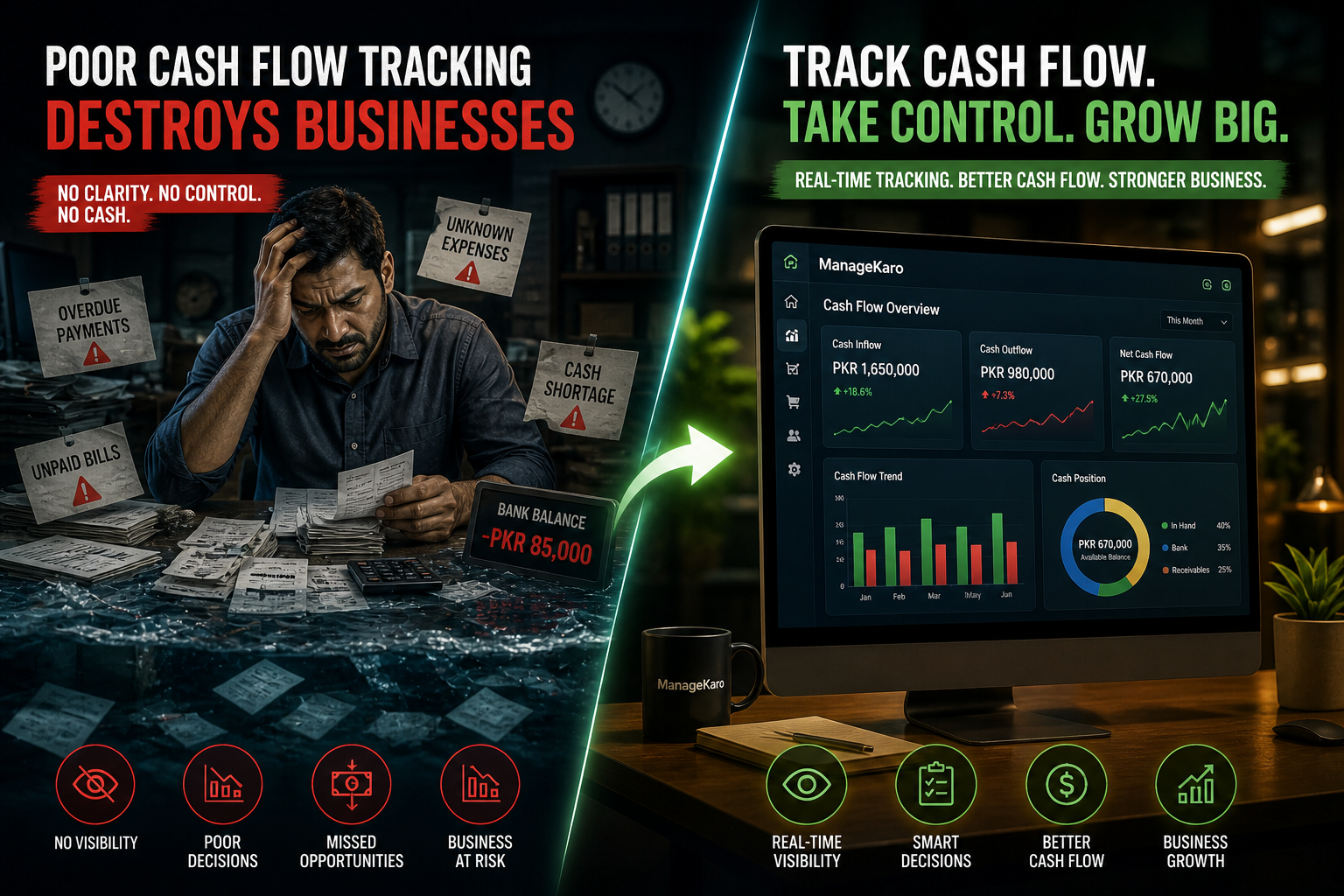
Many businesses fail not because they aren’t profitable—but because they don’t manage cash properly. Poor cash flow tracking quietly damages operations until it’s too late.
If you don’t know where your money is going, you’re not running a business—you’re guessing.
What Is Cash Flow (And Why It Matters)
Cash flow is the movement of money:
- Money coming in (sales, payments)
- Money going out (expenses, purchases, salaries)
Even profitable businesses can collapse if cash isn’t available when needed.
Signs Your Business Has Cash Flow Problems
1. You Run Out of Cash Unexpectedly
- Sales are happening
- But you still struggle to pay bills
2. No Clear Financial Visibility
- You don’t know daily balance
- No clarity on upcoming expenses
3. Delayed Payments and Collections
- Customers pay late
- You lose track of receivables
4. Constant Financial Stress
- Always worrying about payments
- No predictable planning
Why Poor Cash Flow Tracking Happens
Manual Tracking Systems
- Notes, spreadsheets, memory
- No real-time updates
Lack of Centralized Data
- Sales and expenses not connected
- No unified view
No Reporting System
- No daily/weekly summaries
- No future forecasting
The Real Damage to Your Business
Poor cash flow leads to:
- Missed supplier payments
- Late salaries
- Broken trust with vendors
- Lost growth opportunities
In many cases, this is the #1 reason small businesses fail.
How to Fix Cash Flow Issues (Step-by-Step)
Step 1: Track Every Transaction
- Record all income and expenses
- No gaps, no assumptions
Step 2: Monitor Daily Cash Position
- Know how much cash you have today
- Track upcoming liabilities
Step 3: Control Expenses
- Identify unnecessary spending
- Reduce cash leakage
Step 4: Improve Payment Collection
- Track receivables
- Follow up on overdue payments
Step 5: Use Reports for Decisions
- Daily, weekly, monthly insights
- Forecast cash needs
How ManageKaro Helps
ManageKaro gives businesses full control over cash flow with:
- Real-time income and expense tracking
- Automated financial reports
- Clear visibility of daily cash position
- Integrated sales + expense data
This means:
👉 No surprises
👉 Better planning
👉 Stronger financial control
Real Impact on Businesses
Businesses using proper cash tracking systems see:
- Improved financial stability
- Better decision-making
- Reduced stress
- Higher growth potential
Final Thoughts
Poor cash flow tracking doesn’t just slow your business—it can destroy it.
The fix is simple: visibility, control, and automation.
With tools like ManageKaro, you can turn financial chaos into clarity and build a stable, scalable business.