Many businesses start with simple billing software. It’s quick to set up, easy to use, and works well for small operations.
However, as businesses grow, basic billing tools often become a limitation rather than a solution.
If your business is expanding, recognizing the early warning signs can help you avoid operational chaos, lost revenue, and growth bottlenecks.
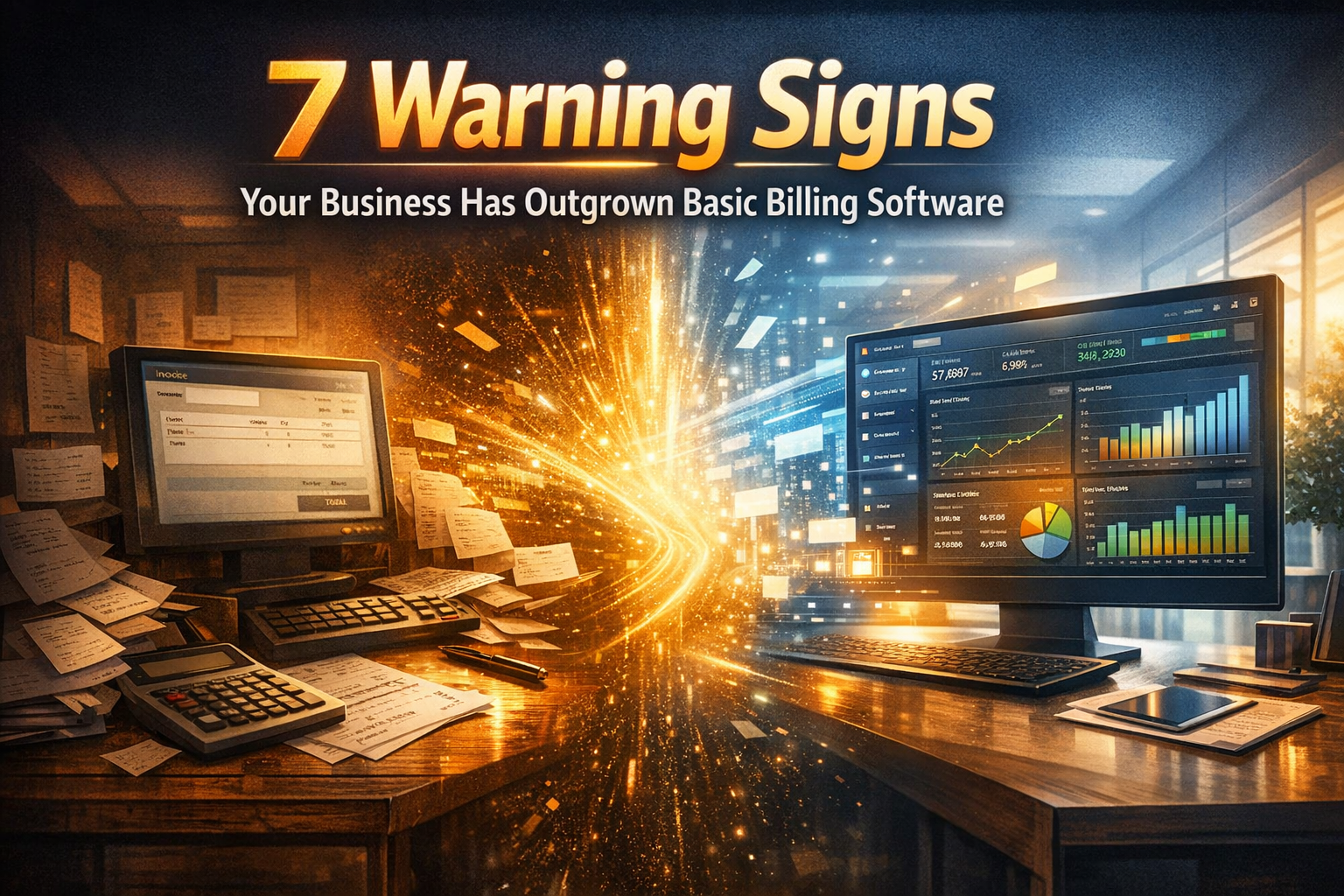
Here are 7 signs your business has outgrown basic billing software.
1. Inventory Errors Are Increasing
Basic billing software often provides limited inventory tracking.
As product lines grow, businesses start facing:
Stock mismatches
Missing inventory
Over-ordering
Dead stock
Without real-time inventory visibility, decision-making becomes reactive instead of proactive.
Growing businesses need systems that connect inventory with sales, purchases, and accounting.
2. You Can’t See Real-Time Business Performance
Many SMEs rely on manual reports or delayed summaries.
This leads to:
Late profit visibility
Cash flow confusion
Delayed decisions
Unexpected losses
Modern business management systems provide real-time dashboards that help owners make faster, data-driven decisions.
3. Multi-Branch Operations Become Difficult
If your business has:
Multiple outlets
Warehouses
Sales teams
Basic billing software struggles to keep everything synchronized.
Common problems include:
Inconsistent stock levels
Manual consolidation
Reporting delays
Centralized systems solve this by connecting all branches in one platform.
4. Accounting Still Requires Manual Work
Billing software often handles invoices but leaves accounting fragmented.
Businesses end up:
Exporting data to accountants
Reconciling manually
Tracking expenses separately
Integrated accounting automation removes this friction and improves financial clarity.
5. Your Team Is Growing But Software Isn’t
As businesses expand, more users need access:
Cashiers
Managers
Accountants
Owners
Basic billing tools often lack:
Role-based permissions
User controls
Workflow management
Growing teams require structured access and collaboration tools.
6. Reporting Feels Limited
Growing businesses need deeper insights:
Top-selling products
Slow-moving inventory
Profit margins
Branch performance
Basic billing software usually provides limited analytics, making it difficult to optimize operations.
7. Business Decisions Depend on Guesswork
When systems don’t provide clear data, businesses rely on intuition.
This leads to:
Poor purchasing decisions
Pricing mistakes
Inventory shortages
Cash flow issues
Integrated business management software removes guesswork and enables strategic growth.
What Growing Businesses Should Use Instead
When businesses outgrow basic billing tools, they should consider:
Integrated billing and POS
Real-time inventory tracking
Accounting automation
Multi-branch management
Financial dashboards
Business analytics
This transition helps SMEs scale efficiently without operational confusion.
Why Growing SMEs Are Moving Beyond Billing Software
Across Pakistan, SMEs are rapidly digitizing operations.
As competition increases, businesses require:
Faster reporting
Better inventory control
Financial clarity
Scalable systems
Modern business management platforms are becoming essential for sustainable growth.
Final Thoughts
Basic billing software is a good starting point — but it isn’t designed for long-term growth.
As businesses expand, operational complexity increases.
Recognizing these warning signs early helps businesses transition to scalable systems before problems impact growth.
Businesses that adopt integrated solutions early gain:
Better visibility
Improved efficiency
Faster growth
In 2026, scalable business management systems are becoming a competitive advantage for SMEs.