Why Businesses Fail Without Proper Purchase Management
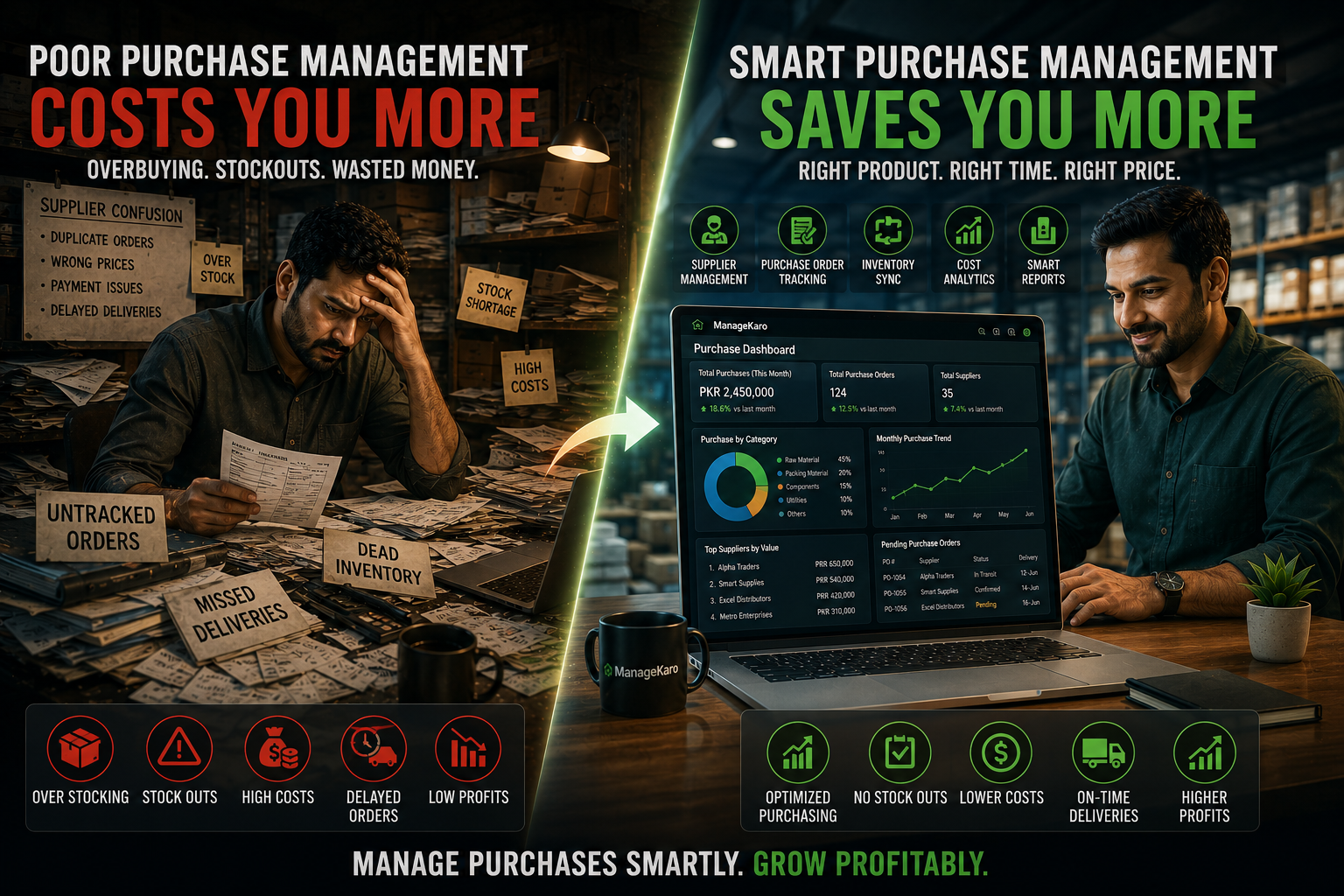
Many businesses focus on sales and inventory but ignore one critical area—purchase management. Without proper purchasing control, businesses overbuy, understock, waste money, and lose operational efficiency.
Poor purchasing decisions silently reduce profits.
What Is Purchase Management?
Purchase management involves:
- Managing supplier orders
- Tracking stock purchases
- Monitoring purchase costs
- Controlling procurement workflows
It ensures businesses buy:
👉 The right products
👉 At the right time
👉 At the right cost
Signs Your Business Has Purchase Management Problems
1. Overstocking and Dead Inventory
Businesses purchase:
- Too much stock
- Slow-moving products
- Unnecessary inventory
2. Frequent Stock Shortages
Poor planning leads to:
- Out-of-stock situations
- Delayed customer orders
- Lost sales opportunities
3. Supplier Confusion
Without tracking:
- Orders get duplicated
- Payments become unclear
- Vendor coordination suffers
4. Rising Operational Costs
Businesses spend more because:
- Purchases are not optimized
- No cost comparison exists
Why Businesses Struggle With Purchase Management
Manual Procurement Processes
- Paper invoices
- WhatsApp orders
- Spreadsheet tracking
No Real-Time Visibility
Businesses cannot clearly track:
- Pending orders
- Supplier history
- Incoming inventory
Lack of Data Insights
Without analytics:
- Purchasing decisions rely on guesswork
- Demand forecasting becomes weak
The Hidden Cost of Poor Purchasing
Weak purchase management causes:
- Cash flow problems
- Inventory waste
- Supplier disputes
- Reduced profitability
Over time, operational inefficiencies compound.
How to Fix Purchase Management Problems
Step 1: Centralize Purchase Records
Store all supplier and purchase data:
- In one system
- Easily accessible
Step 2: Track Purchase Orders
Monitor:
- Pending orders
- Delivered inventory
- Payment status
Step 3: Analyze Buying Trends
Understand:
- Frequently purchased items
- Seasonal demand
- Supplier performance
Step 4: Automate Procurement Insights
Use systems that generate:
- Purchase reports
- Inventory recommendations
- Supplier analytics
How ManageKaro Helps
ManageKaro simplifies purchase management through:
- Purchase order tracking
- Supplier management
- Inventory synchronization
- Real-time purchasing reports
This helps businesses:
👉 Reduce unnecessary spending
👉 Improve stock availability
👉 Strengthen supplier operations
Real Business Impact
Businesses using proper purchase management systems often achieve:
- Better inventory control
- Reduced operational waste
- Improved supplier coordination
- Stronger profitability
Final Thoughts
Poor purchase management creates operational chaos behind the scenes.
Businesses that grow sustainably are the ones that purchase intelligently—not just sell aggressively.
With tools like ManageKaro, businesses gain visibility and control over purchasing, inventory, and supplier operations.