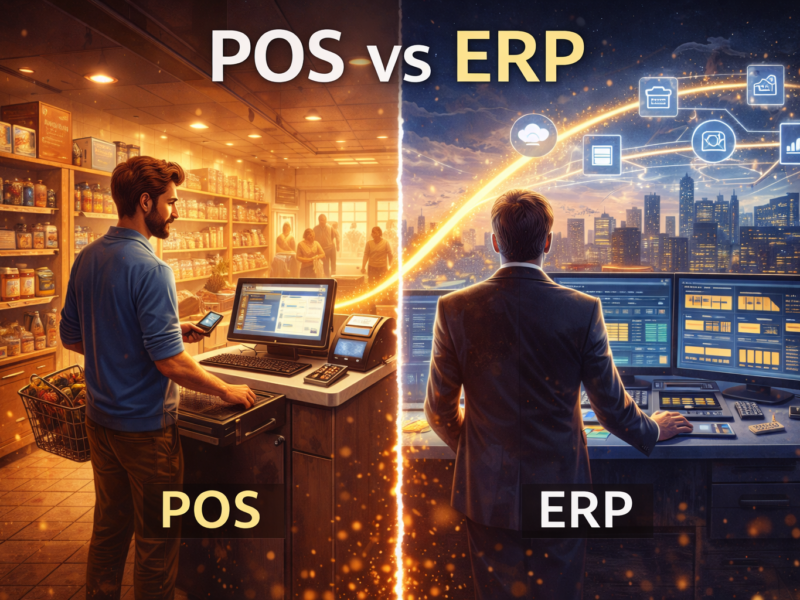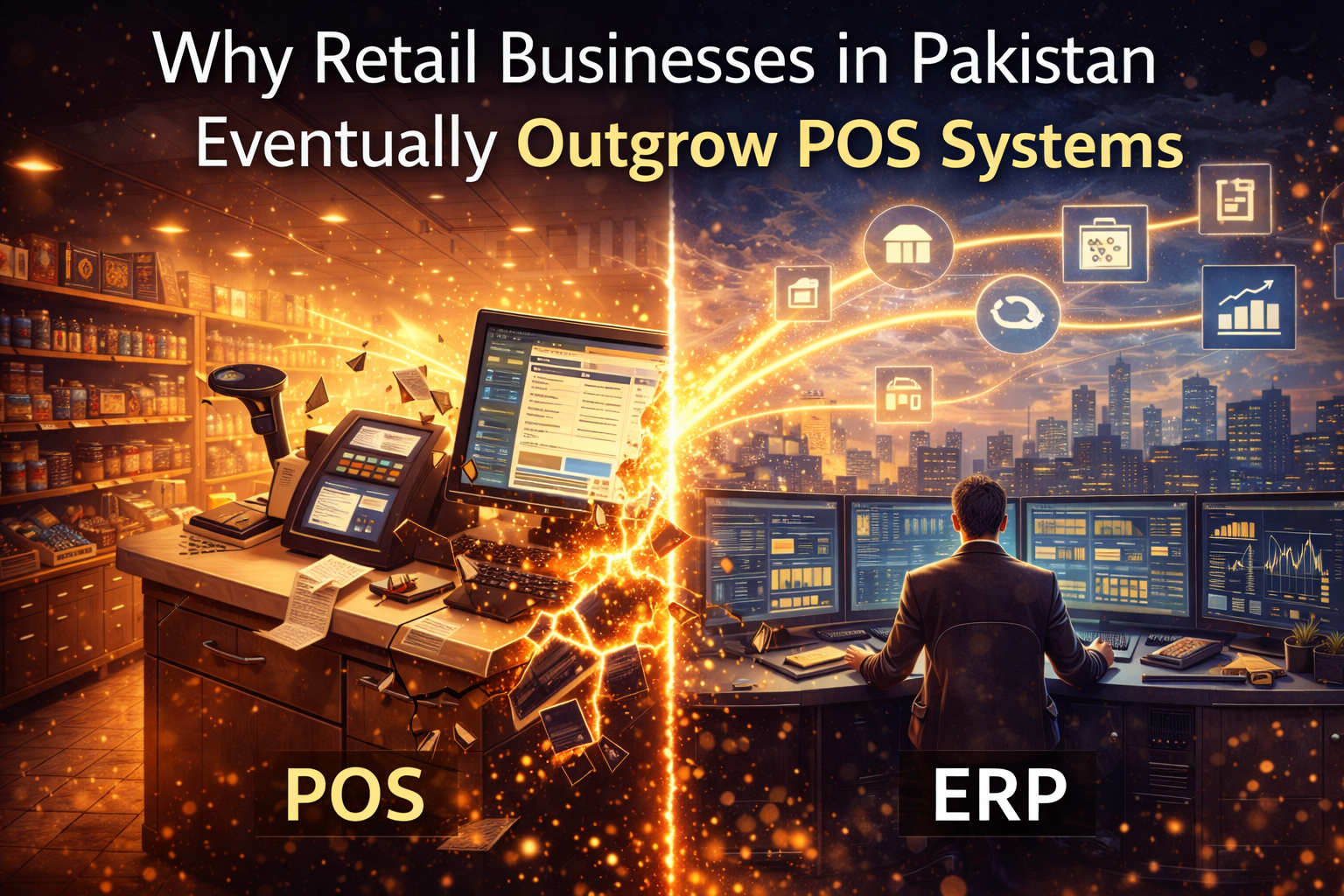
Many retail businesses in Pakistan begin with a POS system. It handles billing, prints receipts, and records transactions. For small shops, this works perfectly. But as the business grows, many owners start noticing operational challenges that POS software alone cannot solve. This is Why retailers outgrow POS systems eventually move beyond POS systems.
What POS Systems Are Designed For
POS systems are built primarily for transaction management.
They help businesses:
- Process customer payments
- Generate invoices
- Scan barcodes
- Record daily sales
For single-location shops, POS systems work well.
The problem begins when operations expand.
The First Limitation: Inventory Complexity
As retail businesses grow, inventory becomes harder to manage.
Common problems include:
- Stock mismatches
- Missing inventory
- Manual reconciliation
- Delayed stock updates
Many POS systems offer only basic inventory tracking, which becomes insufficient for larger operations.
The Second Limitation: Multi-Branch Management
Retail expansion often involves multiple outlets.
Managing inventory, sales, and staff across several locations becomes challenging when systems are not fully integrated.
POS systems typically struggle with:
- centralized branch control
- synchronized inventory
- real-time reporting
The Third Limitation: Financial Visibility
Retail owners need answers to questions like:
- Which branch is most profitable?
- Which products generate the highest margin?
- Where are expenses increasing?
Basic POS systems often lack advanced financial reporting tools.
This leads to manual accounting work and delayed insights.
The Fourth Limitation: Business Growth
POS systems are excellent for starting operations.
But they are not designed to manage the entire business ecosystem.
Growing businesses require tools that manage:
- inventory
- purchasing
- accounting
- staff roles
- analytics
This is where integrated business management systems become important.
Why Many Retailers Transition Beyond POS
When businesses expand, they need:
- centralized control
- better reporting
- scalable systems
- integrated operations
POS software solves billing problems.
Integrated systems solve business management problems.
Final Thoughts
POS systems are an excellent starting point for retail businesses. But as operations grow, their limitations become more visible.
Retailers who move toward more integrated solutions gain:
- better operational visibility
- stronger financial control
- smoother expansion
In competitive retail markets, having the right system can make a significant difference.