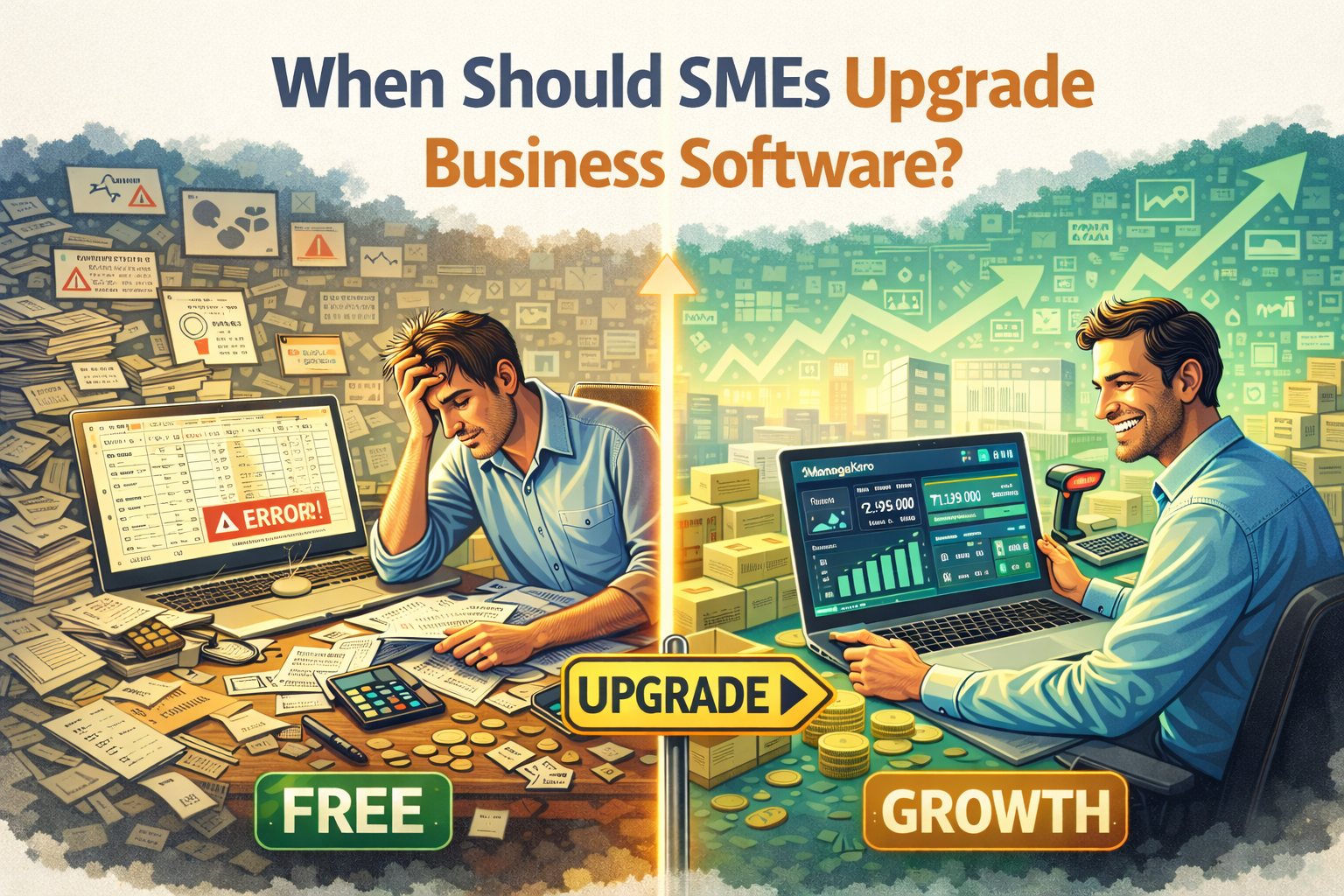
Most small and medium-sized enterprises (SMEs) don’t fail because they choose the wrong software — they fail because they wait too long to upgrade.
Free tools and basic systems work well at the start. But growth quietly changes everything: more sales, more inventory, more customers, and more complexity. The challenge is knowing when it’s time to move on.
Here are the clear signs that an SME should upgrade its business software — before problems become costly.
1. Manual Work Is Taking Too Much Time
If your day is filled with:
- Re-entering data
- Updating multiple tools
- Fixing mismatches
- Calculating totals manually
…it’s a sign your software is no longer helping — it’s slowing you down.
Modern business software should reduce effort, not increase it.
2. You Don’t See Real-Time Numbers
If you only understand:
- Profit at month-end
- Stock after counting shelves
- Cash flow after shortages appear
…your software lacks real-time visibility.
Growing SMEs need live dashboards for sales, expenses, inventory, and cash flow — not delayed reports.
3. Inventory Errors Are Becoming Common
Frequent issues like:
- Stock mismatches
- Missed reorders
- Dead or slow-moving inventory
- Overstocking
…are strong signals that basic tools can’t handle your scale anymore.
Inventory mistakes are one of the earliest and most expensive signs that it’s time to upgrade.
4. Accounting Feels Stressful and Messy
If accounting involves:
- Multiple spreadsheets
- Manual reconciliation
- Last-minute fixes before audits or taxes
…it’s time for automation.
Upgraded software should sync billing, expenses, and inventory directly into accounts.
5. Customer Credit Is Hard to Track
As SMEs grow, credit sales increase.
If you’re unsure:
- Who owes you money
- How much is pending
- Which customers delay payments
…cash flow will suffer.
Better software provides clear customer ledgers and credit visibility.
6. Team Size Is Increasing
When more people join:
- Data duplication increases
- Errors multiply
- Accountability becomes unclear
Basic tools don’t scale well with teams.
Upgrading allows:
- Controlled access
- Cleaner workflows
- Centralized data
7. You’re Making Decisions Based on Guesswork
If pricing, purchases, or discounts rely on intuition rather than data, growth becomes risky.
Upgraded software provides:
- Profit insights
- Sales trends
- Cost breakdowns
Decisions should be data-backed, not instinct-driven.
Why ManageKaro Is the Right Time-to-Upgrade Platform
ManageKaro is built for exactly this transition phase.
It helps SMEs upgrade smoothly by offering:
- Automated billing and POS
- Real-time inventory tracking
- Expense and accounting automation
- Customer credit management
- Live dashboards for sales, profit, and cash flow
- Scalable workflows for teams
Instead of switching tools repeatedly, SMEs grow confidently on one system.
Final Thoughts
The right time to upgrade business software is before chaos starts, not after.
If your business feels busier but less controlled, that’s not growth — that’s a warning sign.
SMEs that upgrade at the right time gain:
- Clarity
- Efficiency
- Better decisions
- Sustainable growth
With ManageKaro, upgrading isn’t a disruption — it’s a growth enabler.