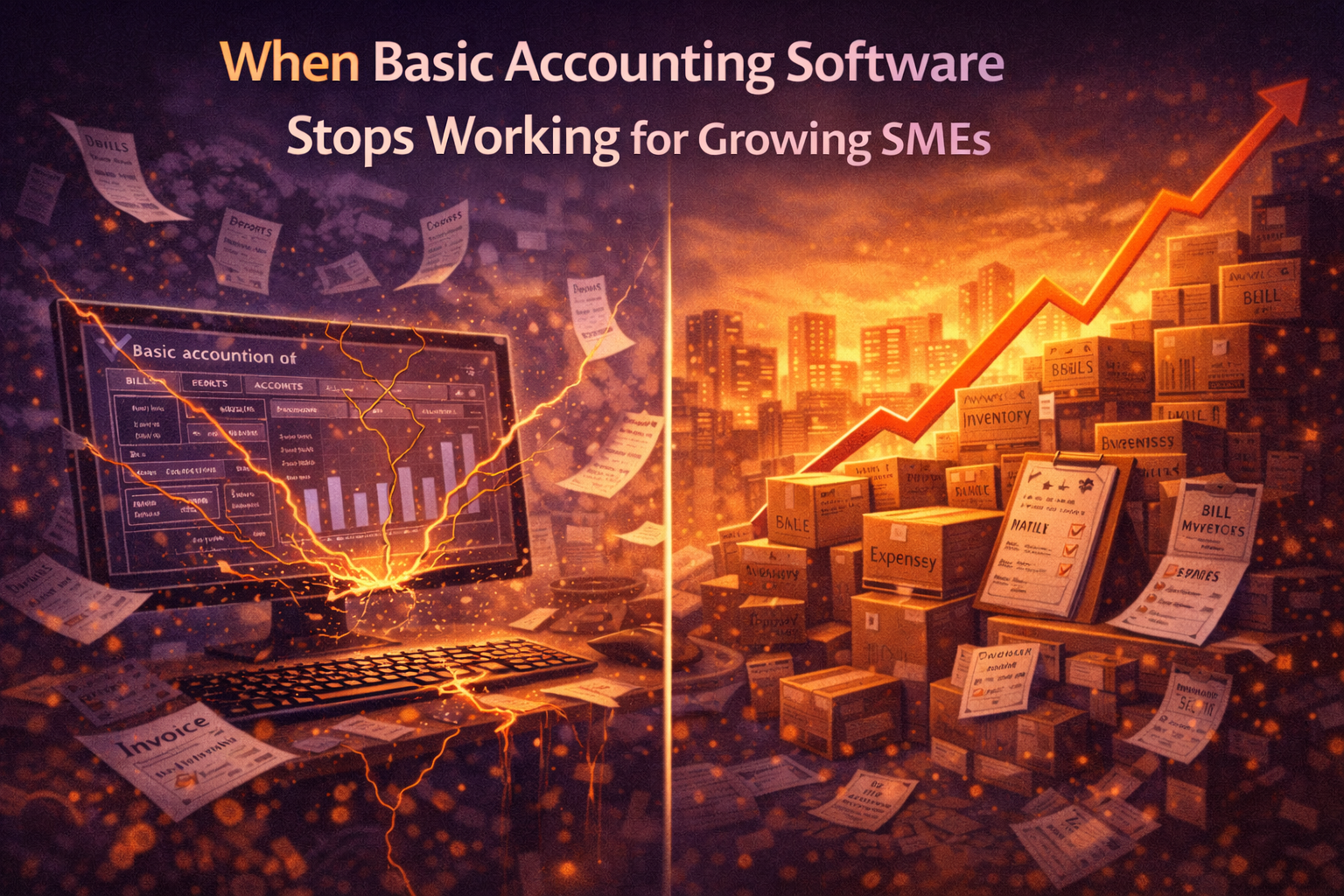
Basic accounting software is where most businesses start. It helps record transactions, generate invoices, and keep finances organized in the early days. But as SMEs grow, many owners quietly realize something uncomfortable:
the software still works — but the business doesn’t.
Here’s how to recognize when basic accounting software stops working for growing SMEs, and what to do next.
1. You Spend More Time Fixing Data Than Using It
As transactions increase, basic tools require:
- Manual corrections
- Frequent exports to Excel
- Reconciliation at month-end
When accounting becomes maintenance instead of insight, growth slows.
2. Sales Are Up, But Confidence Is Down
Many SME owners feel:
- Unsure about real profit
- Unclear about cash position
- Nervous making big decisions
Basic accounting shows numbers — not clarity.
3. Inventory and Accounting Don’t Talk to Each Other
Growing SMEs often struggle because:
- Inventory updates aren’t linked to cash
- Stock purchases distort liquidity
- Dead stock goes unnoticed
Disconnected systems create blind spots that hurt margins.
4. Cash Flow Surprises Become Normal
If you’re often surprised by:
- Supplier payments
- Salary cycles
- Tax obligations
Your system lacks cash-flow visibility, not discipline.
5. Reports Explain the Past, Not the Future
Basic accounting reports answer:
- What happened?
Growing businesses need answers to:
- What needs attention now?
- Where is risk building?
- What should we do next?
Static reports can’t guide fast decisions.
6. You’re Using Too Many Tools
As complexity grows, many SMEs add:
- Excel for analysis
- Separate inventory apps
- Manual follow-ups for credit customers
Tool sprawl increases errors, delays, and stress.
What Growing SMEs Actually Need
At this stage, SMEs need:
- Real-time profit and cash visibility
- Inventory linked to financial impact
- Automated accounting
- Actionable dashboards
- One system instead of many
This is where business management software becomes essential.
Why Growing SMEs Choose ManageKaro
ManageKaro is built for businesses after basic accounting.
It helps SMEs:
- Connect sales, inventory, expenses, and cash
- See profit clearly, not guess it
- Control inventory impact on liquidity
- Reduce manual work
- Make confident growth decisions
Instead of reacting to problems, businesses gain control.
Final Thoughts
Outgrowing basic accounting software doesn’t mean it failed.
It means your business evolved.
The right system doesn’t just record growth — it supports it.
That’s why growing SMEs move to ManageKaro.