Many retail business owners face a frustrating situation:
Sales are increasing, customers are coming in, invoices are rising — yet profits remain disappointingly low.
If this sounds familiar, you’re not alone.
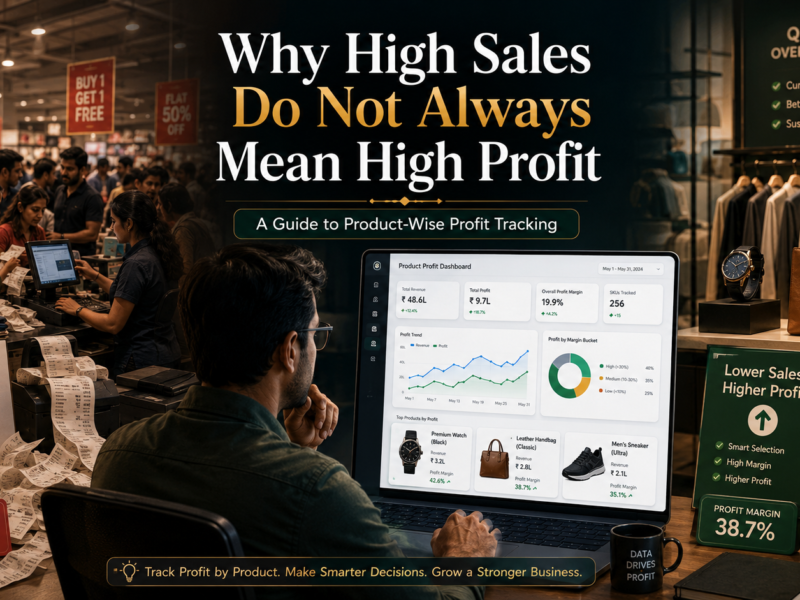
High sales do not automatically mean high profits. In fact, many retailers lose money faster as sales grow — without realizing why. This article explains the real reasons profits stay low despite strong sales and what retailers must fix.
1. You’re Selling High-Volume, Low-Margin Products
Not all sales are equal.
Common mistake:
- Focusing on products that sell fast
- Ignoring how much profit they actually generate
Many retailers push items with:
- Thin margins
- High competition
- Rising costs
Sales look good, but profit barely moves.
2. Inventory Is Locking Up Your Cash
Retailers often overstock to “never miss a sale.”
The result:
- Cash tied up in slow or dead stock
- Storage costs rising
- Discounts eating margins later
Sales happen, but cash flow stays tight — silently killing profits.
3. Expenses Are Growing Faster Than You Think
As sales increase, so do:
- Utility costs
- Staff expenses
- Delivery and logistics
- Operational leaks
Without real-time expense tracking, costs quietly grow until they eat into profit.
4. POS Software Shows Sales, Not Profit
Most POS systems focus on:
- Billing speed
- Daily sales totals
They don’t show:
- Product-level profit
- Expense impact
- Real cash position
Retailers celebrate sales numbers without seeing the full financial picture.
5. Discounts and Promotions Are Hurting Margins
Frequent discounts may boost sales but:
- Reduce unit profit
- Train customers to wait for offers
- Create false growth signals
Without profit-linked reporting, retailers often discount blindly.
6. Inventory Shrinkage Is Eating Profits
Losses from:
- Theft
- Damage
- Manual errors
Often go unnoticed when systems don’t reconcile inventory properly.
These losses don’t appear on sales reports — but they hit profits directly.
7. You’re Making Decisions Without Profit Visibility
Many retailers decide:
- What to restock
- What to promote
- What to discontinue
Based on intuition instead of data.
When decisions aren’t profit-driven, growth becomes risky.
What Retailers Need to Fix This
To turn sales into real profit, retailers need:
- Product-level profit visibility
- Inventory value linked to cash flow
- Expense tracking in real time
- Clear dashboards that show what actually makes money
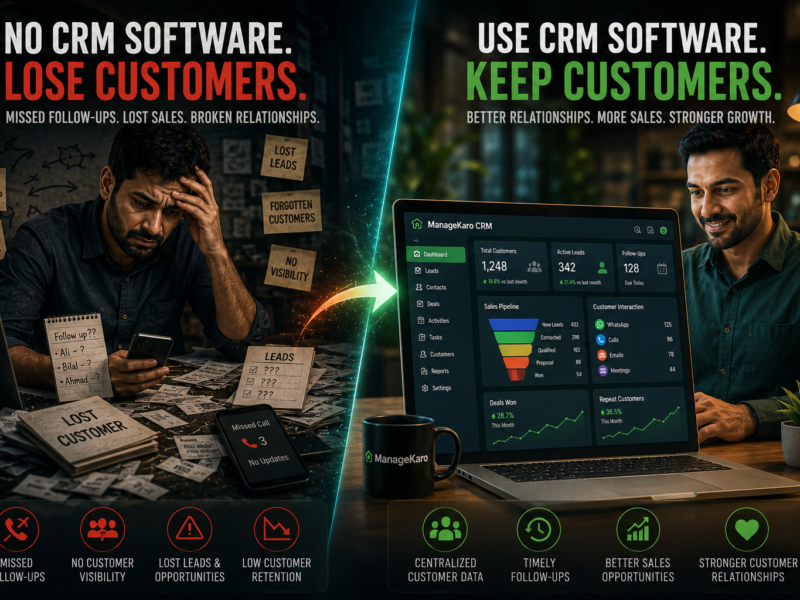
This requires business management software, not just POS.
How ManageKaro Helps Turn Sales Into Profit
ManageKaro helps retailers:
- Track profit per product
- Link inventory with cash flow
- Monitor expenses automatically
- Identify slow-moving and dead stock
- See real-time profit dashboards
Retailers don’t just sell more — they earn more.
Final Thoughts
High sales with low profit isn’t growth — it’s a warning sign.
Retailers who succeed long-term:
- Track profit, not just revenue
- Control inventory, not just stock levels
- Make data-driven decisions
With ManageKaro, sales finally translate into sustainable profit.