Vyapar is widely used by small businesses looking to digitize billing and basic accounting. It’s simple, affordable, and easy to start with. However, as businesses grow, many SME owners begin to notice limitations that slow operations and create confusion.
This article breaks down the key limitations of Vyapar for growing SMEs — and explains what kind of system businesses should move to next.
1. Limited Automation as Business Grows
Vyapar works well for basic workflows, but as transactions increase, many processes still require manual effort.
Common challenges include:
- Manual accounting adjustments
- Reconciliation work at month-end
- Limited automation between modules
For growing SMEs, automation isn’t optional — it’s essential.
2. Weak Real-Time Business Visibility
Growing businesses need to see:
- Live profit
- Current cash position
- Inventory value
- Outstanding customer dues
Vyapar mostly provides static or summary-based reports, which means owners often react late instead of acting early.
3. Inventory Management Becomes Restrictive
As product lines expand, SMEs using Vyapar often struggle with:
- Tracking slow-moving stock
- Identifying dead inventory
- Managing larger catalogs efficiently
- Understanding inventory’s impact on cash flow
Basic inventory tracking is no longer enough at scale.
4. Accounting Still Feels Manual
Many SMEs expect accounting to become easier as they digitize — but with Vyapar:
- Accounting still requires manual oversight
- Entries may need corrections
- Profit clarity isn’t always instant
Growing businesses need accounting that updates automatically with every transaction.
5. Limited Support for Teams and Growth
As SMEs add:
- More staff
- More counters
- More transactions
They often face:
- Data inconsistencies
- Workflow confusion
- Limited scalability
Tools built for solo or micro businesses struggle when teams grow.
6. Decision-Making Still Depends on Guesswork
Without real-time dashboards, many Vyapar users rely on intuition for:
- Pricing decisions
- Stock purchases
- Expense control
This increases risk as business complexity increases.
What Growing SMEs Should Use Instead
As SMEs grow beyond basic billing needs, they should move to all-in-one business management software that offers:
- Automated billing and POS
- Real-time inventory tracking
- Expense and accounting automation
- Customer credit management
- Live dashboards for sales, profit, and cash flow
- Scalable workflows for teams
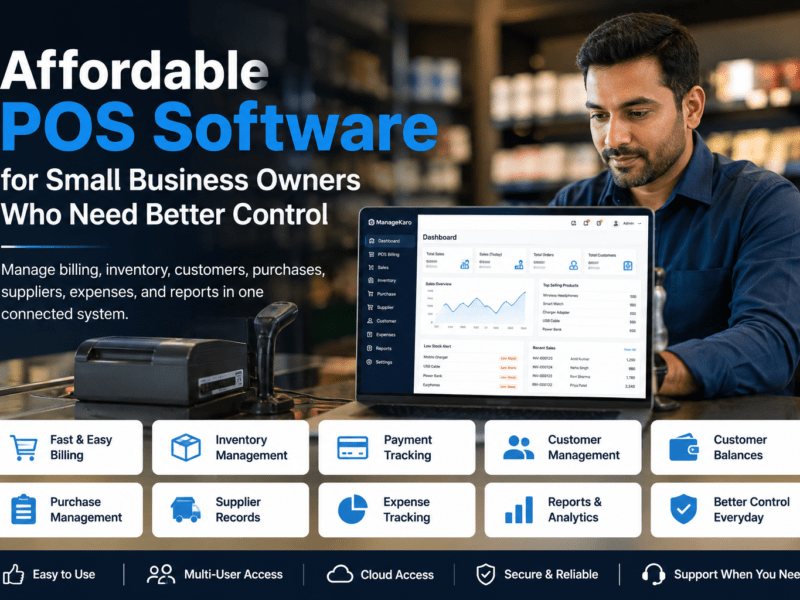
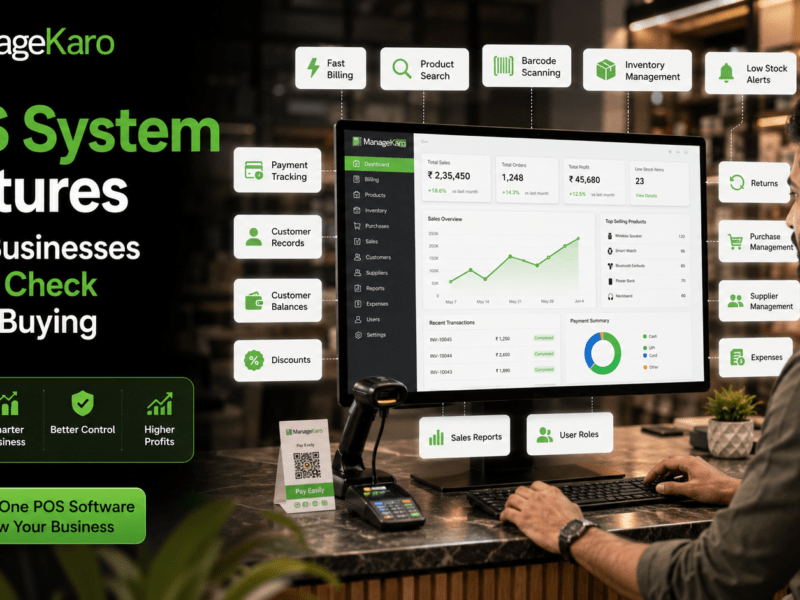
This is where platforms like ManageKaro are designed to fit naturally.
Why ManageKaro Works Better for Growing SMEs
ManageKaro addresses common Vyapar limitations by providing:
- Full automation across billing, inventory, and accounting
- Real-time business visibility
- Clear profit and cash flow insights
- Scalable systems for growing teams
Instead of patching together multiple tools, SMEs manage everything from one platform.
Final Thoughts
Vyapar is a solid starting point — but it isn’t built for long-term growth.
As SMEs scale, limitations become clearer, and the cost of inefficiency increases. Growing SMEs don’t need more features — they need better systems. With ManageKaro, businesses move beyond basic billing to true operational control.